

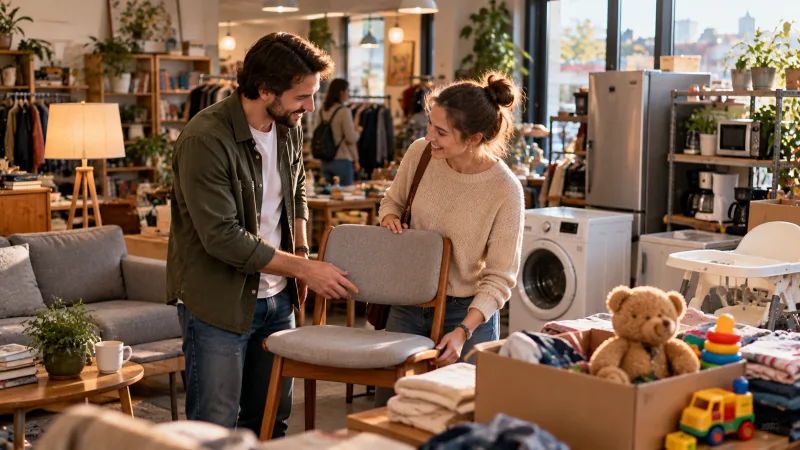
When you move and afterwards, you constantly need something: furniture, a pram, appliances, dishes — and you need to sell what you no longer use. In Serbia this goes quickly if you know the platforms and the safety rules.
Where people buy and sell
- Large classified sites: furniture, appliances, bicycles, tools, children's things. Filters by city and category save time.
- Auction platforms: good for collectibles and electronics, but they require attention to the seller's rating.
- Social media groups and Russian-speaking chats: here things are often given away cheaply, left behind when moving and handed over in person.
- Our own classifieds: housing and items from Russian speakers, with a button to report an advert.
How to buy safely
- Inspect the item in person and test appliances in front of you, not on video.
- Never wire a deposit to strangers, especially for goods that will arrive later.
- Compare the price with a new item: sometimes the difference is only a few thousand dinars and there is no warranty.
- When buying furniture, ask how to move it: delivery and movers are arranged separately.
How to sell
A good listing means honest photos in daylight, exact dimensions and condition, the reason for selling and your city. State the price straight away: make-an-offer listings linger longer and attract empty messages. Hand over the item after payment, and take cash or a transfer in person.
What to do with surplus when moving
- Sell: appliances, furniture, bicycles and tools go within days at a fair price.
- Give away: children's things, books and dishes are readily taken in chats and by charities.
- Do not dump bulky waste in ordinary bins: it has to go to designated sites, otherwise you face a fine.
- Keep documents for appliances and receipts for big purchases — they raise the resale price.
Children's things and books
Children's items move fastest: prams, high chairs, car seats and clothing by size are constantly bought and sold. When selling a car seat, state its expiry date and history — buyers nearly always ask. Russian-language books are valued in Serbia: they are not thrown away but passed on or sold through thematic groups, libraries and family chats.