

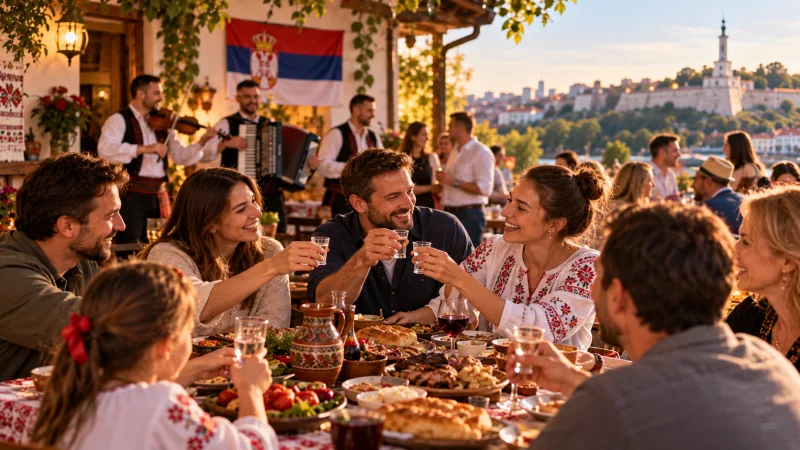
Holidays are the easiest route into local society: you do not invite neighbours over for a chat, you invite them to the table. Serbia takes this openly, and a family that adopts the customs soon stops being a stranger here.
Slava: the Serbian family feast
Krsna slava is the day of a family's patron saint. It is a household celebration passed down through generations: hosts lay the table, light a candle, cut the slava bread, and guests arrive — relatives, neighbours, friends. A slava is not chosen, it is inherited, but foreigners living in a Serbian family or friendship often celebrate it together. What befits a guest: arrive at a reasonable time, congratulate the hosts and bring a small gift — wine, sweets, flowers. There is no need to praise the table, but do taste the food: hosts read a refusal as distancing.
Russian holidays here
- New Year is celebrated twice: on the night of 1 January and on the night of 13 January by the old calendar, the latter especially popular in Russian-speaking families.
- Maslenitsa: pancake gatherings are held in February, organised by communities and clubs, often outdoors and with children.
- 9 May: flowers laid at memorials, participation in processions, meetings of veterans and their descendants.
- Easter, Christmas and Epiphany: Orthodox traditions are close to Serbian ones, so these days are spent with neighbours and parishes.
A calendar that is easy to forget
Serbian public holidays and days off do not coincide with Russian ones: 15 February is Sretenje, 1 and 2 May is Labour Day, and some holidays follow the church calendar. When planning trips and visits, check the holiday calendar: shops and offices keep their own hours and close earlier before major holidays.
Where to find big gatherings
- Russian-speaking communities and city chats: holiday events and meet-ups are announced there.
- Cultural centres and libraries: concerts, children's shows, exhibitions and club meetings.
- Kindergartens and schools: events for parents are a good reason to meet other families.
- Get to know your neighbours yourself: an invitation for tea or to a festive table builds ties more reliably than any language course.