

Doing business in Serbia
How to open a company, pay taxes and grow a business in Serbia.
 Business
Freelancing from Serbia: how to receive money from foreign clients legally
Which form suits a freelancer, what the independence test is, how payments from foreign clients work, when the lump-sum regime is lost and what has to be filed.
 Business
Online services for business in Serbia: ePorezi, eUprava and e-invoices
Which systems a sole trader needs from day one: where to file reports, how to get an electronic signature, what e-invoices are and why nothing works without them under VAT.
 Business
Starting a business in Serbia: DOO or sole trader, and what it costs
How a limited company differs from a sole trader, what the minimum capital is, which taxes and contributions apply, and when VAT becomes mandatory.
 Business
What to choose in Serbia: a company, a sole trader or the flat rate
Three business forms, three different sets of rules. We compare them by liability, entry cost, reporting and tax — and explain which one fits which situation, so you do not overpay for years.
 Business
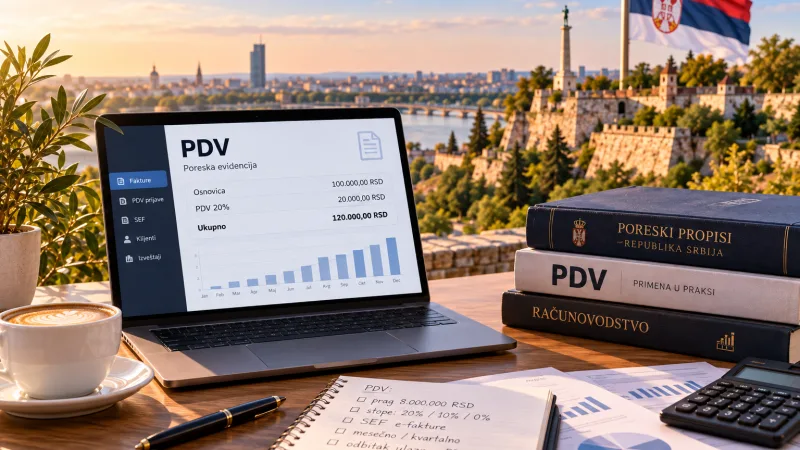
VAT in Serbia: the eight million threshold and rates of 20% and 10%
When a business must register for VAT, what counts towards the threshold, which rates apply and what happens if the deadline slips. Plus electronic invoicing through SEF and voluntary registration.
 Business
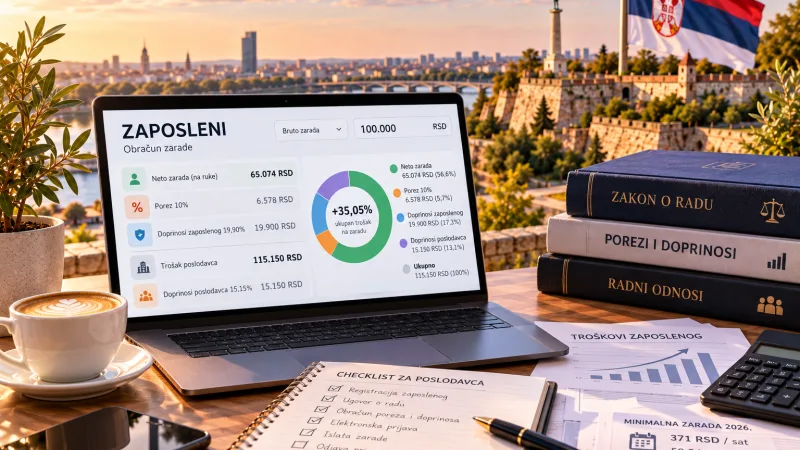
Payroll taxes and contributions in Serbia in 2026
What an employee really costs: a 10% salary tax, 35.05% in contributions, a minimum wage of 371 dinars per hour, and the employer's obligations with every payment. Worked through with concrete numbers.
 Business
The flat-rate entrepreneur in Serbia: fixed tax and a six million limit
A flat-rate entrepreneur pays a fixed amount instead of tax on actual income. We explain who the regime suits, what the turnover limit is, what the monthly payment covers, and when the right to it is lost.
 Business
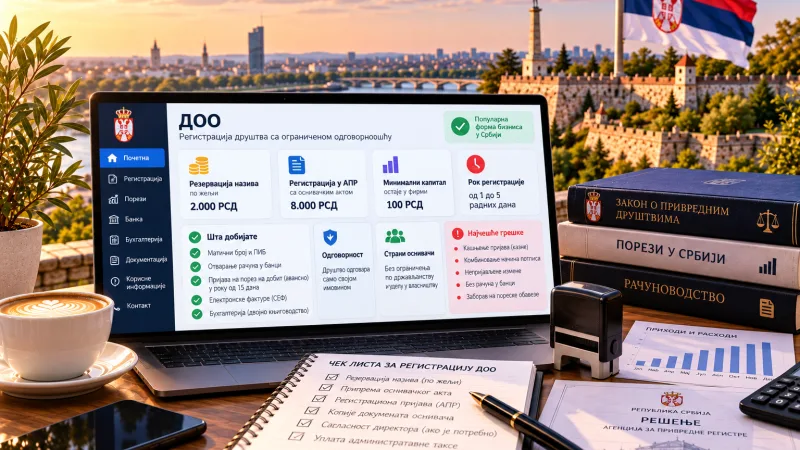
Opening a company in Serbia: the limited liability company
A limited liability company in Serbia can be founded by a foreigner, and the minimum capital is just 100 dinars. Step by step: documents, signatures, deadlines, fees, and what has to happen in the first 30 days after registration.