

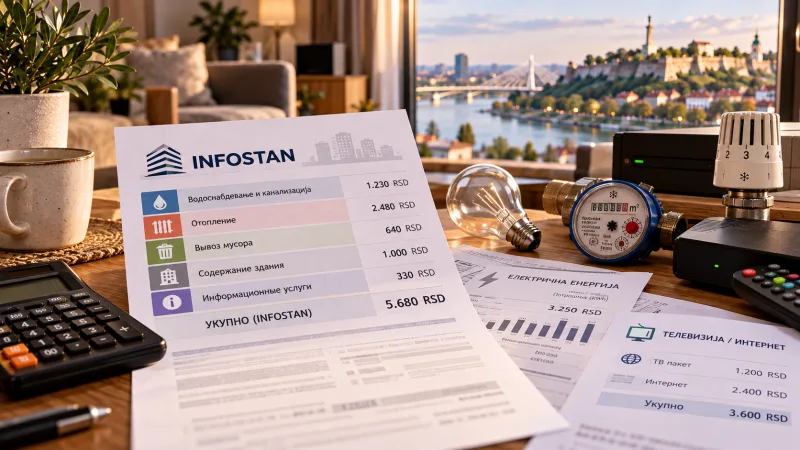
It is not one bill
The main difference from the familiar system: in Serbia household payments arrive on several documents rather than one. Electricity is paid separately, through the power company's bill. In Belgrade the rest is collected in a single bill through Infostan: heating, water, waste collection, building maintenance and part of the municipal services. The television subscription is a separate line as well. So the monthly total is made up of several payments, and they should not be confused.
What it costs
For one person in a small flat, utilities usually fall in the range of ten to twenty-five thousand dinars a month. The least is paid in summer, when heating is off, and the most in winter. The heaviest line is heating: tariffs have been revised and have risen noticeably in recent years. In buildings without central heating, winter means paying for electricity: where people heat with convectors and air conditioners, winter bills can multiply, and that is the main housing cost.
What the single bill covers
The Belgrade single bill covers heating, cold and hot water, sewerage, waste collection, maintenance of common parts of the building, and work the city carries out centrally. The television subscription is charged as a separate state fee and arrives regardless of whether you watch broadcasts. Other cities have a similar structure, but instead of one bill there may be several local providers: the municipal utility, the water company and the building manager.
How to pay
Payment goes through the post office, a bank or banks' mobile apps, as well as payment services by card. The easiest is to set up a standing order or pay from the bank app using the barcode on the bill, so deadlines are not missed. Late payment carries interest, and with prolonged debt the provider can restrict the service. Keep payment confirmations: in disputes about arrears they settle the question fastest.
Debts and a change of occupier
With a rental it matters to agree who pays which bill: most often the tenant pays electricity and water with waste, and the owner pays heating and building maintenance, but that is always a matter for the contract. When buying a flat, arrears on all services are checked before the transaction: debt on property tax and utilities passes to the new owner, who then has to deal with it. Ask providers for statements of outstanding debt before signing the contract — that is standard practice, not a sign of distrust.
How to save
First: check your electricity tariff and make sure the meter works correctly and readings are submitted on time. Second: replace old lighting and appliances with efficient ones — with high winter costs that pays for itself within a season. Third: in buildings without central heating, insulating windows and setting the heating correctly brings noticeable savings. Fourth: ask whether the provider offers relief for low-income and large families: discounts exist, but you have to apply for them yourself.