

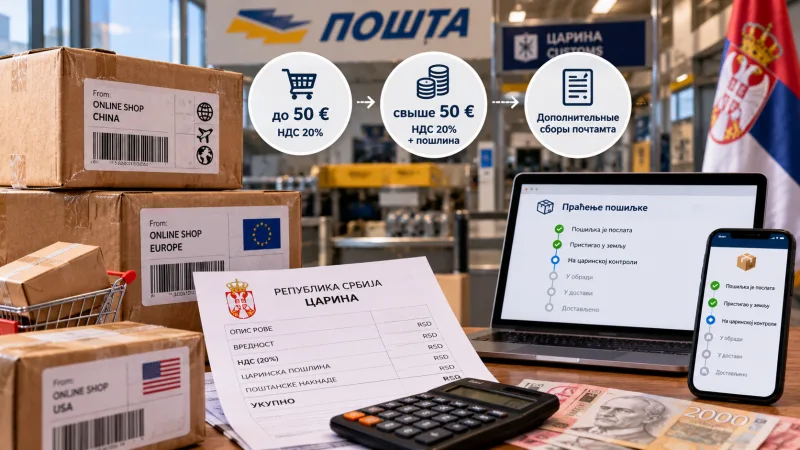
The key distinction: VAT and duty
When receiving a parcel from abroad it matters to distinguish two things. VAT is value added tax and is charged almost always. Customs duty is a state charge that arises only in certain cases. It used to be thought that parcels up to 50 euros passed completely free of charge: that is not correct. Up to that amount there is indeed no duty, but VAT at 20 per cent must be paid.
What it costs to receive a parcel
The logic is this: parcels worth up to 50 euros — no duty, but VAT at 20 per cent. If the value is higher, customs duty is added, at a rate depending on the type of goods, and VAT is then calculated on the value plus duty. On top of that the post introduced separate handling fees: a fixed amount per shipment for the customs inspection service and the preparation of an electronic declaration, plus a commission for paying the charges assessed by the customs administration. The upshot: even a cheap purchase from a foreign shop costs more than the price on the receipt, and that should be allowed for when ordering.
Automation and electronic data
The post has moved to an automated import procedure: customs control is largely based on electronic advance data, meaning processing of information about a shipment begins before it physically arrives in the country. For the recipient this means less manual work at inspection but stricter requirements for accurate data: if the declaration says one thing and the parcel contains another, the shipment is held until it is cleared up.
How to check and pay the charges
The amount charged for a postal shipment can be checked on the customs administration portal: you enter the first and last name exactly as they appear on the parcel and receive a document with the calculation. The shipment status is tracked on the post's website in the tracking service, and all delivery questions are handled by the post, not by customs: the post has an information centre and an online contact form. Charges are paid on receipt or through payment services, and without payment the parcel is not released.
Private couriers
Besides the state post, private courier services operate in Serbia, and large foreign shops often send orders through them. Couriers handle customs clearance for the client and charge their own commission, so the final amount can differ by several euros between services. When ordering it is worth checking who handles clearance and whether the commission is included in the delivery price, so there is no unpleasant surprise at handover.
Sending from Serbia and practical advice
When sending a parcel abroad you must complete a customs declaration and state the contents and value accurately: understating them causes delays and sometimes confiscation. Prohibited items are listed in the post's rules and include not only weapons or drugs but also certain medicines, plants and animal products. Keep receipts and tracking numbers: in disputes they are the only document. And bear in mind that in holiday periods delivery times lengthen and customs processing slows, so orders for December and the May holidays should be placed with two to three weeks of leeway.