

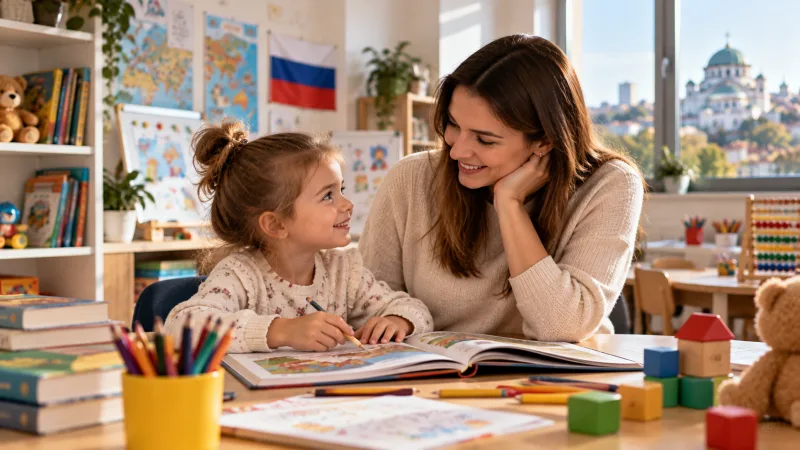
Children pick up Serbian quickly — on the playground, at kindergarten, at school. Russian is the first thing to fade in that environment, so it needs deliberate support: conversation classes, reading, clubs and meetings with Russian-speaking peers.
Where to look for activities
- Cultural centres and Russian book places: Russian language courses for children, competitions, creative studios.
- Russian-speaking chats and city communities: that is where schedules, prices and reviews of teachers are shared.
- Local music and sports schools: Serbia has plenty, and enrolment is usually by phone or through a website.
- Libraries and city culture centres: art, chess and drama clubs — cheaper than private ones.
What to check before signing up
- Which language the classes are taught in and whether the teacher understands Russian — if the goal is to keep the language, this is the key question.
- How many children are in the group and whether a trial class is offered.
- The monthly price and what it includes: materials, uniform, performances.
- The schedule: does it clash with Serbian school, which takes up the first half of the day.
School and language
Serbian schools teach in Serbian, and that is fine: your child will learn it faster than you did. The family's job is to stop Russian slipping away. A simple rule works: speak Russian at home, read aloud, watch cartoons and films in Russian, and once a week have a lesson with a teacher or a meet-up with Russian-speaking peers.
Sport and creativity
For sport, Serbia offers football, basketball, swimming, gymnastics, tennis and martial arts; for creativity, music, art, dance and theatre. Choose what the child enjoys rather than what sounds prestigious: motivation matters more than the name of the section. In the first months after moving, allow time to adjust — add new activities gradually rather than all at once.
Summer holidays
School holidays in Serbia are long, and summer activities are booked well in advance: camps at sports clubs, creative weeks, swimming, language groups. Places at popular camps go in spring, so check schedules in March and April. If your child is going to camp for the first time, start with a short session and find out who is responsible for the children, how medical supervision is arranged and whether you can call the carer directly.