

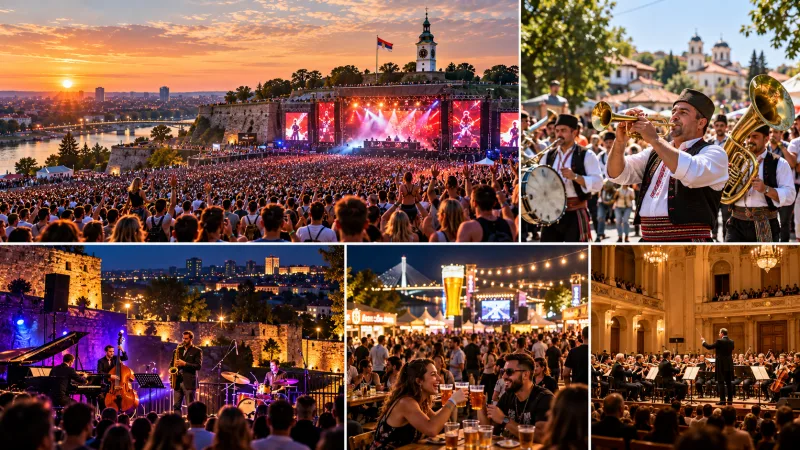
The summer season
Serbia's main music festivals fall in July and August. EXIT in Novi Sad takes place in July at the Petrovaradin Fortress: it is the country's largest festival, drawing world-class acts, and the site itself — an eighteenth-century fortress above the Danube — is considered one of the most striking in Europe. You can get there by train from Belgrade, as Novi Sad is an hour away on the fast line.
August: trumpets, jazz and beer
In August the country lives through several events at once. Guca hosts the trumpet festival — a celebration built around brass music and Serbian tradition, with orchestras arriving from all over the country. In Nis, August belongs to Nisville: a jazz festival with open stages and big bands. In Belgrade the beer festival runs on the riverbank with a concert programme and local breweries. These are the busiest weeks of the season, so accommodation in Guca and Novi Sad is booked well ahead.
Autumn: classical music and theatre
In autumn festivals move indoors. In October Belgrade hosts BEMUS, an international classical music festival taken up by the philharmonic, concert halls and theatres across the city. The theatre season is marked by BELDOCS and theatre showcases, while Novi Sad has film programmes and exhibitions in autumn. Tickets for classical evenings are moderately priced, and some concerts are free for students.
Winter: film and holiday programmes
In winter musical events shift into club and holiday formats: New Year and Christmas concerts in the squares, documentary film festivals, winter programmes at ski resorts. On Kopaonik and Zlatibor the season brings concerts and parties tied to the skiing calendar. Major winter shows are usually announced in November and December.
How to plan a festival trip
Festival dates change from year to year, so check the programme on the event's official website first, then book accommodation: during EXIT and Guca hotels and apartments cost several times more, and free places disappear months in advance. The route to Novi Sad is convenient by train, to Guca and Nis by bus or car. At open-air festivals you need water, a hat and shoes you can stand in for hours.
Practical details
Tickets are almost always sold online and prices rise in stages: buying early is cheaper. ID is required at the entrance even with an electronic ticket. At large events cash helps for food and drink, as not every stall has a card terminal. And bear in mind that after big concerts public transport runs an enhanced schedule, but return train or bus tickets are best bought in advance, otherwise you will only leave the next morning.