

Three operators
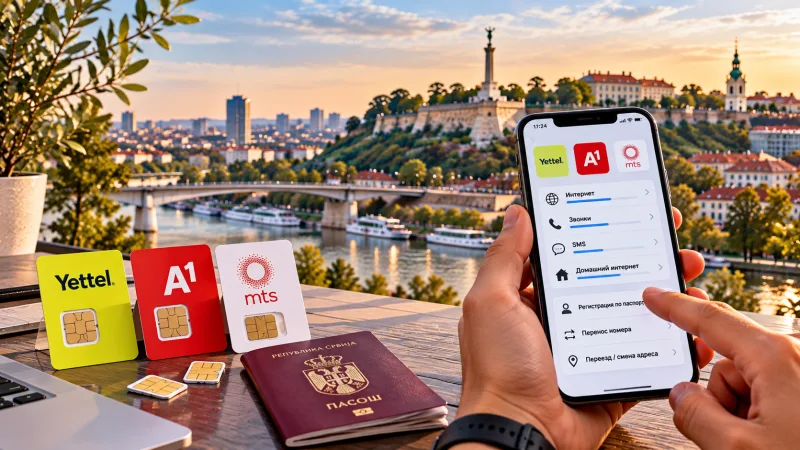
Three mobile operators work in Serbia: MTS, Yettel and A1. All three cover the larger cities and main roads, and the differences lie in tariffs, speed in a specific area and service quality in the branches. Belgrade and Novi Sad have 5G, coverage depends on the district and the building, so a tariff is best chosen not only on price but on the coverage map.
SIM card and registration
A SIM card is sold to a foreigner against a passport. Important: prepaid numbers in Serbia must be registered, so buying a card and using it anonymously is not possible. Registration is done at the operator's branch or through the app at purchase, and a passport is mandatory. Contract tariffs are taken out with a residence permit and address, but are cheaper per gigabyte and come with more options.
What service costs
A prepaid package with data usually costs within ten euros a month: a few gigabytes of general traffic plus separate gigabytes for messaging apps and social networks. Tourist packages start at a few hundred dinars for a short term, but they are poor value for permanent life. Contract tariffs give more data for the same money, but require monthly payment under a contract, often for a term of a year.
Home internet
Home internet costs about 20 euros a month, with speeds up to 500 megabits per second on a standard plan. Providers offer internet plus television bundles, which are cheaper than two separate contracts. Connection takes from a few days to two weeks: technical feasibility at the address is checked first, so when looking for a flat it is worth checking in advance which provider serves the building and whether there is fibre.
Porting a number and cancelling
A number can be ported to another operator while keeping it: the request is filed at the new operator's branch, the process takes a few days, and any debt to the previous operator must be cleared. If you are leaving and want to cancel early, you usually have to pay the remainder under the contract or buy out the equipment — those terms are in the contract and are worth reading at signing, not at cancellation.
What to consider after moving
A local number is needed almost everywhere: the bank, kindergarten, school, clinic and employer ask for a Serbian number rather than a foreign one. So the SIM card is taken in the first days, right after registering the address. If you talk to Russia a lot, internet calls through messaging apps are cheaper, with mobile data spent on them — that keeps costs predictable. And check that your phone supports Serbian operators' bands: handsets bought for other markets sometimes do not work on local 5G frequencies.